
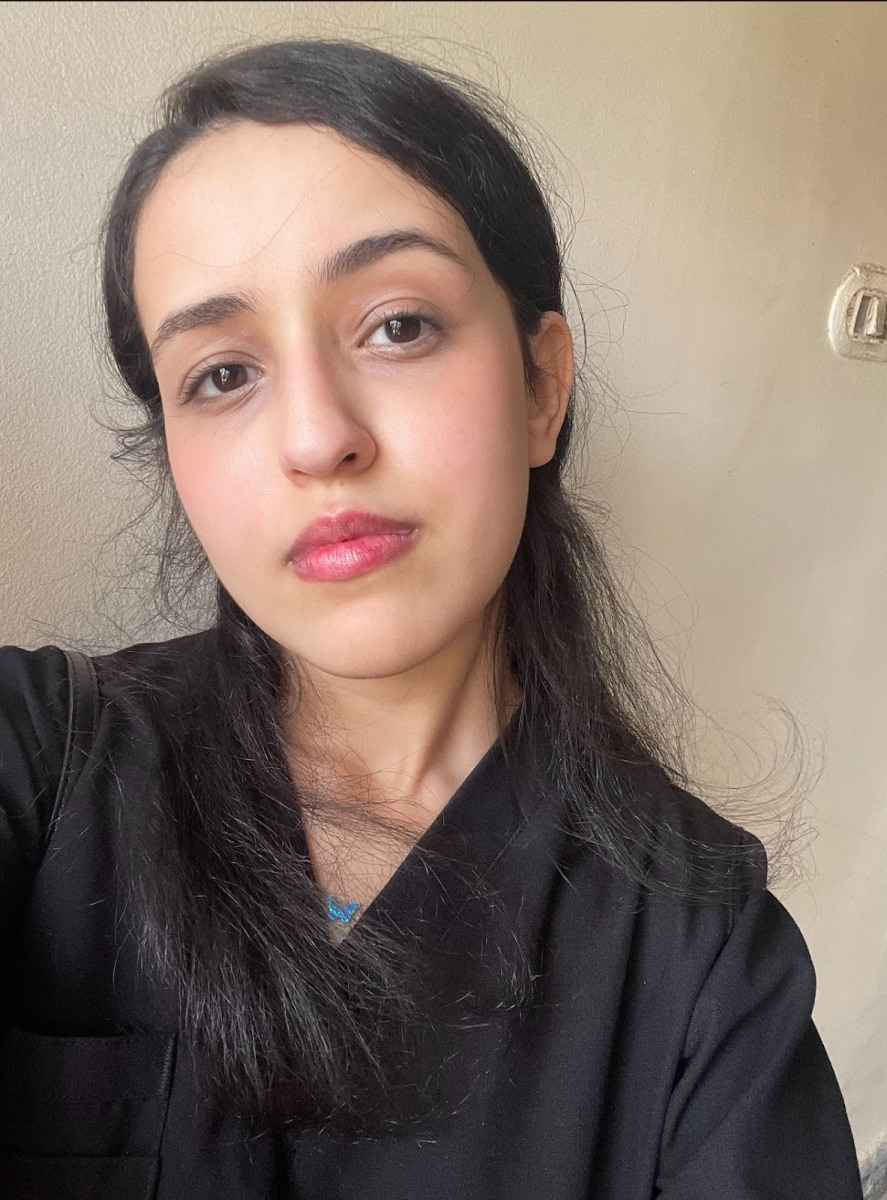
Dr Yasmine Mourad Asaad is a Primary Care Physician based in Egypt and a member of our group. Here, she shares her reflections on collaborating with our group as an early career professional.
What sparked your interest in the topic of ageing, and what aspects of it continue to motivate your engagement in this field?
My interest in aging was sparked during my clinical training, where I began to notice how older adults present with complex health needs, often involving social challenges. Despite this, their care is guided by limited evidence in the global south. In addition, structured geriatric services are not frequently available in that region.
I began volunteering in ageing-related initiatives, including the Dementia Support Initiative (DSIE). Through this experience, I gained deeper insight into the realities of ageing and dementia care, including the pressures faced by patients, families, and caregivers within the healthcare system. These experiences highlighted the importance of evidence-informed, context-sensitive approaches to improving care for older adults. Currently, I’m contributing to evidence synthesis at the Center for Optimal Aging, Marymount University.
Do you think ageing is currently a priority in our country? If so, how do you think evidence synthesis can help address it?
I think ageing should be a priority, both nationally and globally. People everywhere are living longer thanks to better healthcare. But in many places, especially LMICs and LICs, older adults are still not getting the attention, services, they deserve. Geriatric care may not be formally established, and there is a lack of locally relevant research to guide clinical practice and policy in the global south and my country. This creates a gap between the growing needs of older populations and the services available to support them.
I believe evidence synthesis is so important. It helps us see the real needs of older people and shows where our systems are falling short. Once we have this evidence, sharing it is just as crucial. Evidence doesn’t change anything unless people hear it, understand it, and act on it. That’s where Cochrane Global Ageing plays such a key role: by bringing reliable, trustworthy evidence to the surface and making sure it reaches those who can make a difference.
What initially motivated you to collaborate with Cochrane Global Ageing, and how did you become involved in the Thematic Group?
I was initially motivated to collaborate with Cochrane Global Ageing by a strong desire to contribute to high-quality evidence synthesis that can directly inform better care and policy for older populations. I have been contributing to Cochrane since last year as I appreciate Cochrane’s work in influencing healthcare decisions.
My interest deepened after exploring Cochrane Global Ageing’s work and seeing the impact of its initiatives, including its collaboration with the WHO Life Course Programme and its evidence synthesis projects on key issues such as social isolation in older adults. These initiatives clearly demonstrated how robust evidence can shape policy, guide practice, and address priorities that truly matter to older people.
I became involved through the Thematic Group, where I had the opportunity to contribute to meaningful and timely projects. I was especially inspired by how welcoming and inclusive the group was, and by the genuine encouragement to participate, learn, and contribute. Being part of the Thematic Group has been a highly motivating and rewarding experience, and it has reinforced my commitment to advancing evidence-informed approaches to healthy ageing.
How do you think that collaborating with Cochrane Global Ageing may influence your transferable skills for other aspects of your career, and what projects with the Thematic Group would you like to develop moving forward?
Working with Cochrane Global Ageing has been an incredible learning experience. I’ve had the chance to develop my skills in evidence-based medicine and research methods, and I’ve learned new skills such as quality appraisal, which is amazing! Beyond that, collaborating internationally has helped me build connections and relationships in the field. The projects I’ve contributed to are high quality, and it’s truly an honor to contribute to projects affiliated with Cochrane Global Ageing.
Looking ahead, I’m excited to get more experience with the early stages of evidence synthesis, like protocol writing and searching, and to work on reviews that explore the relationship between mental health and ageing while continuing my contributions with the group.
Overall, being welcomed so warmly by the group has made this experience both inspiring and rewarding. For anyone thinking about getting involved, my advice is simple: ask questions, reach out, and enjoy the journey! It's a great way to learn and grow!